Table of Contents
TogglePainting your bathroom vanity is one of the quickest, cheapest ways to refresh a tired bathroom without renovation-level costs or hassle. Instead of dropping thousands on a replacement vanity, a fresh coat of the right paint can make your cabinet look brand new in a single weekend. Whether you’re dealing with dated wood stain, outdated laminate finishes, or just need a color change to match new décor, learning how to paint a bathroom vanity is a skill that pays for itself. This guide walks you through everything you need to know, from selecting moisture-resistant paint to protecting your finish against daily bathroom humidity.
Key Takeaways
- Painting a bathroom vanity costs $100–$400 and takes one weekend, compared to $1,000–$5,000 for replacement, making it the most affordable bathroom refresh option.
- Bathroom vanity paint must be moisture-resistant semi-gloss or high-gloss acrylic latex, as standard interior paint fails within months due to humidity and temperature cycling.
- Proper preparation—cleaning, sanding, and priming with a bonding primer—determines 80% of the final result and is essential for paint adhesion on glossy surfaces.
- Apply a water-based polyurethane sealer after the paint fully cures to dramatically boost moisture resistance and extend the finish lifespan to 5+ years.
- Skipping primer, rushing the curing process, or exposing the vanity to water too early are the most common mistakes that cause peeling, blistering, and premature failure.
- A freshly painted bathroom vanity achieves a designer-quality look without requiring professional refinishing, making it an ideal weekend DIY project for budget-conscious homeowners.
Why Paint Your Bathroom Vanity Instead of Replacing It
A standard bathroom vanity replacement costs $1,000 to $5,000 installed, depending on quality and labor. Painting one costs $100 to $400 in materials and requires only a weekend of work. Beyond the budget angle, there’s another reason: a well-painted vanity can last 5+ years with proper prep and finish. The key is understanding that bathroom vanities face genuine punishment, constant moisture, temperature swings, soap splashes, and humidity that exceeds 60% on most days. This hostile environment is exactly why most DIY paint jobs fail: they use interior latex or standard semi-gloss, which can’t handle the moisture cycling. Your painted vanity can look as polished as a professional refinish when you use the right materials and techniques from the start.
Choosing the Right Paint for Your Vanity
Best Paint Types for Moisture-Prone Spaces
Not all paint is created equal when it comes to bathroom vanities. Standard interior latex or acrylic paint will blister, peel, or show water damage within months. Your vanity needs paint engineered for moisture resistance.
Semi-gloss or high-gloss acrylic latex remains the industry standard for bathroom cabinets. It resists moisture better than flat or eggshell finishes and wipes clean, essential when toothpaste spatters and shower steam condense on your cabinet. Look for paints labeled “bathroom,” “kitchen,” or “high-moisture” formulas. Major brands like Benjamin Moore, Sherwin-Williams, and Valspar offer dedicated lines: these typically cost $35–$60 per gallon but deliver much better adhesion and durability than budget paint.
Water-based urethane topcoats are worth the extra step. After painting with acrylic latex, a water-based polycrylic or polyurethane sealer hardens the finish and boosts moisture resistance dramatically. This two-step approach, paint plus sealer, outperforms single-coat solutions for bathroom cabinets.
Oil-based enamel paints were the old standard and still work well for bathrooms because they cure harder than latex, but cleanup is messier and they off-gas for weeks. If you choose oil, ensure good ventilation and use oil-based primer.
Avoid acrylic craft paints, chalkboard paint, and flat finishes entirely. They don’t handle moisture and will fail within months. Your vanity preparation and paint choice set up the entire project for success.
Step-by-Step Preparation and Painting Process
Prep work determines 80% of the final result. Rushing this phase is where most vanity paint projects go sideways.
Gather Materials and Tools:
- Primer (bonding primer for glossy surfaces or standard acrylic primer)
- Semi-gloss acrylic latex paint (two 1-quart cans recommended)
- Water-based polyurethane sealer
- Sandpaper (120-grit and 220-grit)
- Drop cloth, painter’s tape, gloves, safety glasses, and N95 mask
- 2-3 inch angled brush or small foam roller
- Sanding block or palm sander
- Trisodium phosphate (TSP) cleaner or degreaser
- Small putty knife for filling gaps
Step 1: Empty and Protect the Area
Remove everything from inside the vanity and clear the countertop. Lay down a plastic drop cloth under and around the cabinet. Mask off the sink rim, backsplash, and wall with painter’s tape. Use a 6-inch wide tape, bathroom spray and steam migrate, and narrow tape won’t block moisture.
Step 2: Clean and Degrease
Wipe the entire vanity surface with a TSP solution (follow package directions) or degreaser. This removes soap film, dust, and mineral buildup that primer won’t stick to. Rinse thoroughly and let dry completely, at least 2 hours. Lingering moisture causes adhesion failure.
Step 3: Sand the Surface
Use 120-grit sandpaper to scuff the existing finish. You’re not trying to remove all the finish, just break the gloss enough that primer has something to grip. Sand with circular motions, working methodically across the entire cabinet. Wipe away all dust with a damp cloth, then let dry. Finish with 220-grit for a smoother surface. This matters more than most DIYers realize, a properly scuffed surface is why commercial refinishers’ work lasts.
Step 4: Fill Gaps and Cracks
If there are small gaps around seams or damage from use, fill with paintable caulk or spackling compound. Sand smooth once dry.
Step 5: Prime
Apply a bonding primer, not standard drywall primer. Bonding primers (Zinsser Cover Stain or Benjamin Moore’s Advanced Primer) are formulated to stick to glossy, nonporous surfaces. Apply thin, even coats with your brush or foam roller. Two coats are standard: let each dry per product directions (usually 1–2 hours). Primer that looks slightly chalky when dry is fine, that texture helps the paint stick.
Step 6: Paint
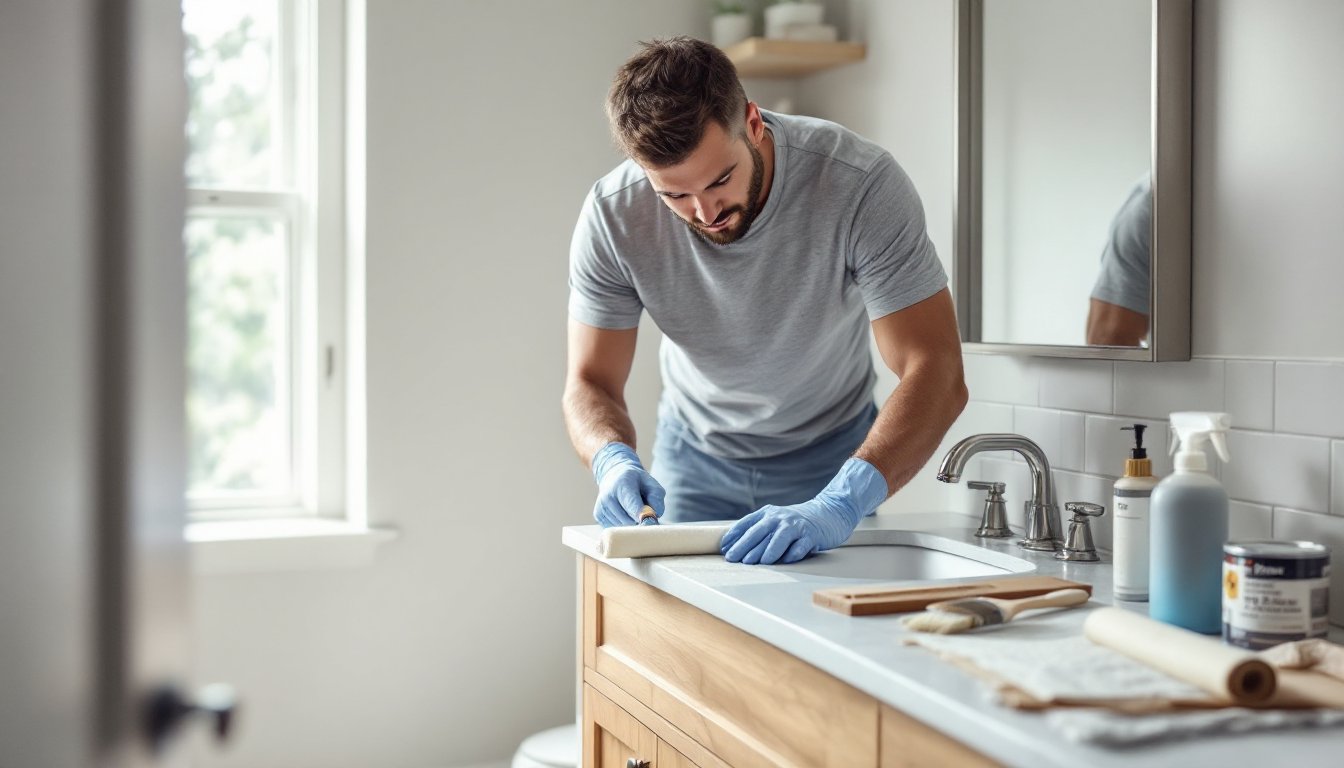
Apply your first coat of semi-gloss bathroom paint with long, even strokes. A foam roller minimizes brush marks on flat panels: use a brush for edges and corners. Maintain a wet edge to avoid lap marks. Let dry fully (check the can, usually 2–4 hours for water-based), then lightly sand with 220-grit sandpaper to knock down any dust nibs. Wipe clean and apply a second coat.
Step 7: Cure Time
Wait at least 24 hours after the final paint coat before using the vanity or exposing it to water. Water-based paint continues to cure for up to a week, so patience pays off.
Most DIY vanity painters can complete these steps in a Saturday. Take your time on prep, it’s not as visually rewarding as painting, but it’s where quality lives.
Common Mistakes to Avoid When Painting Vanities
DIY vanity painting fails most often due to a few predictable errors. Knowing these ahead of time saves frustration and money.
Skipping Primer or Using the Wrong Type
Some DIYers think two coats of paint eliminate the need for primer. This always backfires in bathrooms. Primer creates adhesion: paint provides color and finish. Without primer, the paint sits on top of the glossy surface, and moisture eventually seeps underneath, causing peeling. Always use a bonding primer on glossy cabinet surfaces, it’s not optional.
Not Acclimating Wood or MDF
Many vanities are made from medium-density fiberboard (MDF), which absorbs moisture and swells. If your cabinet sits in a dry garage for months before painting, then lives in a humid bathroom, wood movement causes paint cracking. Store your materials in the bathroom for 24–48 hours before painting so they adjust to actual humidity levels.
Applying Too-Thick Paint Coats
Thick coats dry unevenly, run, sag, and fail. Multiple thin coats always beat one thick coat. Aim for coverage you can see through slightly: a second coat will go opaque.
Painting Over Water Damage or Mold
If the vanity shows water stains, soft spots, or any black mold, painting over it seals the problem inside. Address water damage with repairs first. Sand out mold spots, treat with a mold killer, and let dry before priming and painting.
Exposing to Water Too Early
The biggest immediate mistake is using the sink while the finish is still curing. Water-based paint cures, not dries, there’s a difference. Fully cured paint has a hard shell: partially cured paint can spot, dull, or develop white marks when wet. Wait the full time the manufacturer specifies, or go longer. A week is safer than 24 hours.
Sealing and Protecting Your Painted Finish
A painted vanity needs a protective topcoat to survive bathroom conditions. This is the step that separates a paint job lasting 2 years from one lasting 5+.
Apply a Water-Based Polyurethane Sealer
After your paint fully cures (24–48 hours minimum), apply a water-based polycrylic or polyurethane sealer in semi-gloss or satin. These are tough, clear coatings that harden the paint underneath and repel water. Oil-based polyurethane works too but yellows over time, which matters if your paint is white or pale. Apply sealer with a foam roller, thinly, in 1–2 coats. Each coat dries faster than paint, usually 2–3 hours. Sand lightly between coats with 220-grit.
Ongoing Maintenance
Once your vanity is sealed and cured, treat it like any other bathroom surface: wipe spills promptly, avoid sitting heavy objects on wet surfaces, and don’t use abrasive scrubbers that scratch the finish. Mild soap and water clean it without damage. Many homeowners, inspired by budget home makeovers on DIY blogs, plan their vanity refresh as part of a larger bathroom update, painting the vanity takes weekend-level effort, so it pairs well with new hardware, a mirror frame refresh, or caulking updates.
Signs Your Finish Is Failing
White spots, blistering, or peeling mean the seal or paint is compromised. Small spots can sometimes be spot-repaired with matching paint and sealer, but widespread failure requires sanding and repainting. Preventive maintenance, wipe moisture, ensure good ventilation, keeps problems from developing in the first place.
Conclusion
Learning how to paint a bathroom vanity removes one of the last barriers to an affordable bathroom refresh. The skill is straightforward when you prioritize the fundamentals: right paint type, meticulous prep, thin coats, and a protective sealer. Resources like DIY furniture painting tutorials and budget renovation blogs show that homeowners refresing vanities as part of larger décor updates gain real momentum from completing this one project. A freshly painted vanity doesn’t require professional help, doesn’t demand a week of living around construction, and costs far less than replacement. Start this weekend, and you’ll have a cabinet that looks like a designer refresh.