Table of Contents
ToggleIf you’ve ever cooked bacon in a closed kitchen and watched smoke creep across the ceiling, you already understand why a range hood matters. A range hood is a ventilation system mounted above your stove or cooktop that removes steam, smoke, grease, and cooking odors from your kitchen. Whether you’re planning a renovation, upgrading an old unit, or simply trying to figure out what that appliance actually does, understanding how range hoods work and what they accomplish is essential for a healthier, fresher kitchen. In this guide, we’ll walk through what a range hood is, how it operates, the different types available, and how to choose the right one for your space.
Key Takeaways
- A range hood is a ventilation system that removes steam, smoke, grease, and cooking odors by drawing air upward through filters or ducting it outside, protecting both your kitchen’s air quality and structural integrity.
- Range hoods are available in four main types—under-cabinet, wall-mounted, island, and downdraft systems—each suited to different kitchen layouts, with ducted hoods being more effective than ductless recirculating options.
- Proper CFM (cubic feet per minute) sizing is essential: multiply your cooktop width by 100 for electric or 150 for gas to calculate requirements, and oversizing wastes energy and increases noise.
- Modern range hoods feature multi-speed fans, LED lighting, and durable baffle filters that are dishwasher-safe and easier to maintain than mesh alternatives.
- Choosing the right range hood requires measuring your space (hood should be at least as wide as your cooktop with 24–30 inches of clearance), assessing your cooking habits, and deciding between ducted (more effective, requires ductwork) and ductless (quieter, requires regular filter replacement) systems.
Understanding Range Hoods and Their Purpose
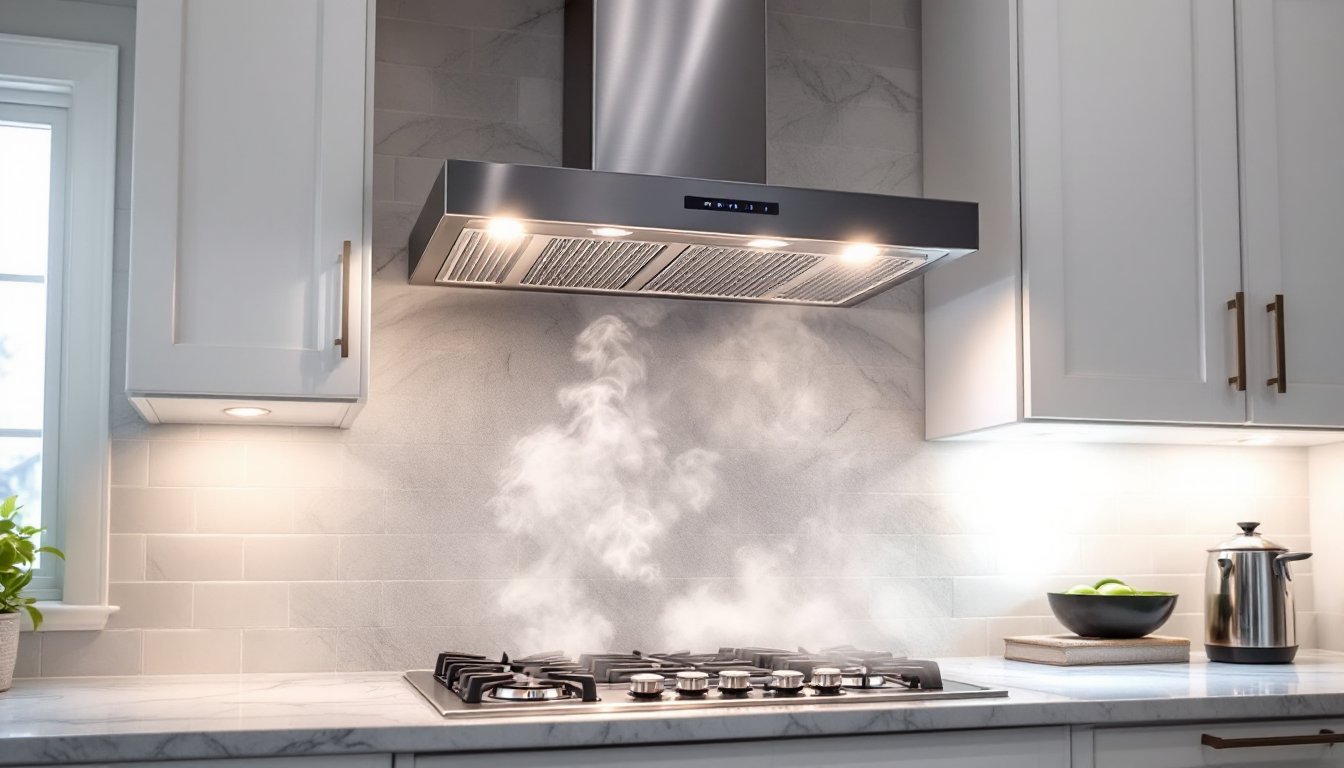
A range hood (sometimes called a cooktop hood or ventilation hood) is an appliance that captures and removes airborne contaminants produced during cooking. When you boil water, fry food, or sauté vegetables, your stove generates moisture, heat, odors, and microscopic particles of grease that linger in your kitchen air. Without proper ventilation, these particles settle on walls, cabinets, and ceilings, creating a grimy buildup over time.
Range hoods solve this problem by drawing air upward through a filter or directly outside. The CFM (cubic feet per minute) rating tells you how much air volume the hood can move, typically ranging from 300 to 1,200 CFM for residential kitchens. A higher CFM doesn’t always mean better: you need enough power to handle your cooking style, but oversizing can create unnecessary noise and energy waste.
Beyond air quality, range hoods protect your kitchen structure. Moisture from cooking can warp cabinets, damage drywall, and promote mold growth if left unchecked. A properly functioning range hood keeps humidity at manageable levels, extends the life of your kitchen finishes, and makes the space genuinely more pleasant to cook in. Think of it as preventive maintenance for your entire kitchen environment.
Types of Range Hoods for Different Kitchen Layouts
Range hoods come in several configurations, each designed for different kitchen setups and design preferences. Choosing the right type depends on your stove location, available space, and whether you want the hood to be a visible focal point or hidden away.
Under-Cabinet and Wall-Mounted Options
Under-cabinet range hoods mount directly beneath cabinetry above your cooktop. These are the most compact and affordable option, typically 30 or 36 inches wide to match standard cooktop sizes. They’re ideal for smaller kitchens, apartments, or rental situations where you want a functional, no-fuss solution.
Wall-mounted range hoods sit above your stove without any cabinet concealment, often serving as a design statement. They come in various styles, from sleek stainless steel to decorative chimney designs, and offer flexibility in width and depth. Wall-mounted hoods work well if you have open shelving or a window directly above the stove. Both under-cabinet and wall-mounted units can vent outside (ducted) or recirculate air back into the kitchen using a filter system (ductless).
Island and Downdraft Systems
Island range hoods are suspended from the ceiling above a cooktop positioned in the kitchen’s center. These deliver excellent ventilation and visual impact, making them popular in modern open-concept kitchens. But, they require ceiling clearance, proper ductwork routing, and more complex installation.
Downdraft systems are built directly into the cooktop or countertop surface and pull air downward rather than upward. They’re space-saving and sleek but generally less effective than overhead hoods because heat and steam rise naturally, making it harder for a downdraft to capture them efficiently. Downdraft works best in smaller kitchens or where overhead venting isn’t practical, though you’ll typically sacrifice some ventilation performance.
Key Features and Benefits You Need to Know
Modern range hoods offer several features worth understanding. Multi-speed fans let you adjust ventilation power based on what you’re cooking, gentle simmering needs less power than high-heat searing. Look for LED lighting under the hood, which illuminates your cooktop far better than older incandescent bulbs and lasts longer.
Baffle filters (curved metal inserts) are more durable and easier to clean than mesh filters: they resist grease buildup and can run through a dishwasher. Charcoal filters are essential for ductless (recirculating) hoods, trapping odors as air cycles back into the kitchen. These filters need replacement every 3–6 months, depending on cooking frequency.
The benefits of proper range hood installation extend beyond comfort. Reducing airborne grease means less frequent cabinet cleaning and longer-lasting kitchen finishes. Controlling moisture and odors improves indoor air quality, which matters especially in households with respiratory sensitivities. A quiet, efficient range hood, typically running 50–65 decibels on low speed, won’t dominate conversation during dinner. Ducted systems are more effective than recirculating ones because they exhaust contaminants completely outside rather than filtering and recirculating them. Experts at Good Housekeeping tested ranges with specific ventilation requirements, noting that proper CFM sizing paired with correct ductwork installation maximizes performance.
Choosing the Right Range Hood for Your Kitchen
Selecting a range hood involves measuring, assessing your cooking habits, and thinking about your space.
Start with sizing. Your hood should be at least as wide as your cooktop, ideally 3 inches wider on each side. Standard widths are 30, 36, 42, and 48 inches. Measure the distance from your cooktop surface to the bottom of your cabinets, most hoods need 24–30 inches of clearance for safe, effective operation.
Calculate CFM requirements. A basic rule: multiply your cooktop width in inches by 100 (for electric) or 150 (for gas). A 36-inch gas cooktop needs roughly 5,400 CFM at maximum. But, if your kitchen is very open or you rarely cook intensively, you might get away with less. Oversized hoods waste energy and create unnecessary noise.
Decide between ducted and ductless. Ducted hoods are more effective and exhausting contaminated air outdoors, but they require routing ductwork outside, sometimes challenging in existing homes. Ductless hoods avoid ductwork installation and are quieter operationally, but they rely on filters that need regular replacement and don’t remove moisture as effectively.
Think about noise. Efficient motors and larger ducts reduce noise. Look for hoods rated at 65 decibels or lower if you spend a lot of time in your kitchen. For design inspiration and to see how range hoods fit into overall kitchen layouts, Houzz showcases kitchen remodel ideas with ventilation solutions in various styles. Similarly, The Kitchn offers practical kitchen appliance advice to help you understand appliance selection.
Consider installation. Under-cabinet and wall-mounted hoods are DIY-friendly if you’re comfortable with basic wiring and fastening. Island hoods and complex ducting typically require a professional electrician and HVAC work. Check local building codes, many jurisdictions mandate range hood venting for gas cooktops due to safety and indoor air quality standards.
Conclusion
A range hood isn’t just a nice addition to your kitchen, it’s a practical investment in air quality, appliance longevity, and cooking comfort. Understanding what a range hood does, how different types function, and which configuration fits your space empowers you to make a confident choice. Whether you go with an affordable under-cabinet unit, a statement-making island hood, or a space-saving downdraft system, proper sizing and installation ensure years of effective ventilation. Take time to measure your space, assess your cooking needs, and weigh ducted versus ductless options before you buy. Your future self will thank you when your kitchen stays fresher, cleaner, and more pleasant every single day.