Table of Contents
ToggleA standing water problem in your Kenmore dishwasher can derail your routine quickly. Whether it’s a pool of murky liquid at the bottom after a cycle or water backing up during the wash, a dishwasher that won’t drain signals a blockage or mechanical failure somewhere in the system. The good news: most drain issues are fixable without calling a technician. This guide walks you through the most common culprits, clogs, hose blockages, and pump failures, so you can get your dishwasher running properly again. We’ll cover practical troubleshooting steps that work for most Kenmore models, plus clear guidance on when a professional repair is the right call.
Key Takeaways
- A clogged filter basket at the bottom of the tub is the most common reason a Kenmore dishwasher won’t drain, and cleaning it with warm water and a toothbrush solves most issues in minutes.
- Inspect the drain hose for kinks, blockages, and missing knockout plugs in garbage disposals, as these account for the majority of remaining drainage problems.
- Listen for grinding or chirping sounds during a cycle, which indicate a jammed impeller in the drain pump that may require manual clearing or professional replacement.
- A system reset—either via the breaker panel or control panel buttons—can restore normal operation after your Kenmore dishwasher senses a drain fault.
- If basic troubleshooting fails, pump motor or drain valve failures require professional repair; consider replacement if your dishwasher is over 10 years old and repair costs exceed 50% of a new unit’s price.
- Perform preventive monthly maintenance using dishwasher cleaner or white vinegar to break down mineral buildup and prevent future slow drains and blockages.
Check for Clogs in the Filter and Basket
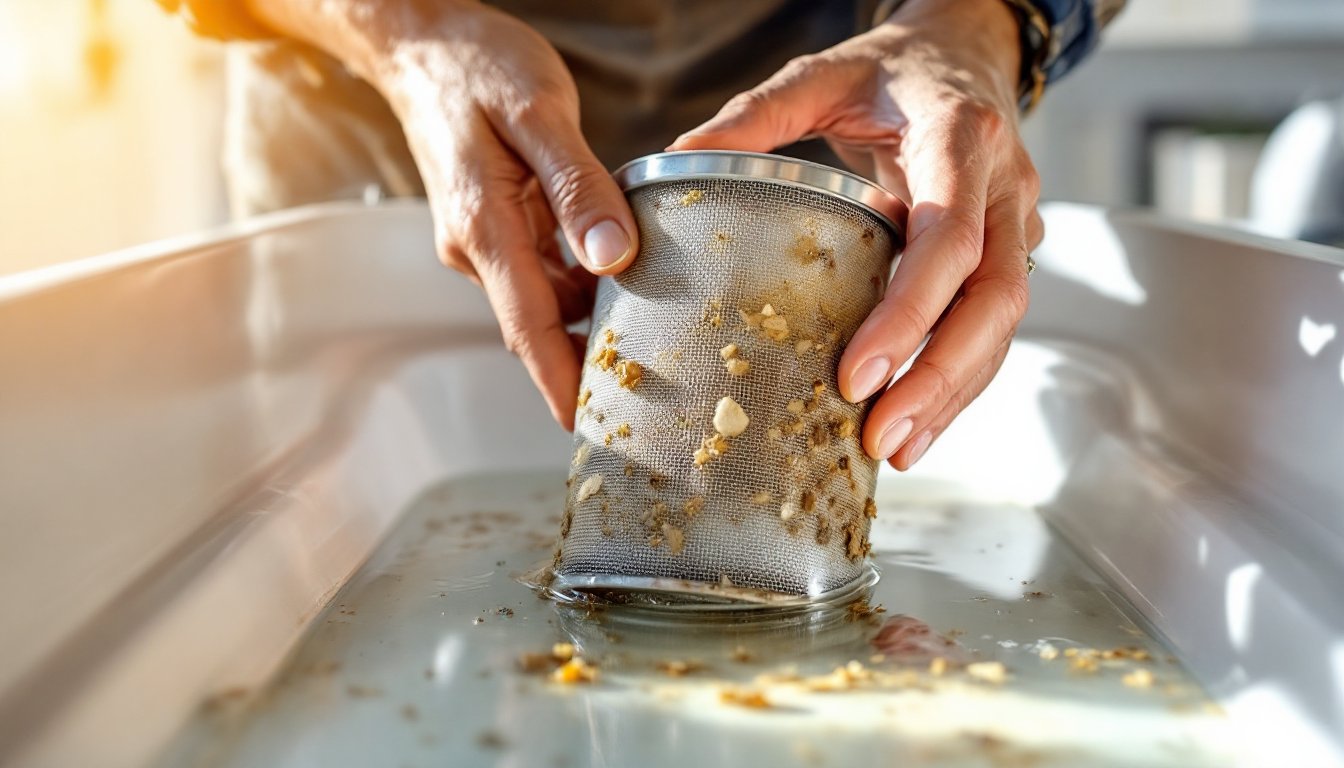
The first place standing water collects is usually the filter basket at the bottom of the tub. A clogged filter is the most frequent reason a Kenmore dishwasher won’t drain. Food particles, glass fragments, and mineral buildup accumulate here over time, blocking the drain port underneath.
Start by unloading the dishwasher completely and removing the bottom rack to access the filter. Most Kenmore models have a cylindrical or flat filter screen that unscrews counterclockwise. Hold it under warm running water and scrub away visible debris with an old toothbrush. Pay attention to the small holes in the filter mesh, mineral deposits and trapped particles love hiding there. If the filter is badly discolored or damaged, replace it with an OEM part for your model number to ensure proper fit.
Once you’ve cleaned the filter, look at the drain cover or basket directly beneath it. Rinse it thoroughly as well. Flip the filter basket upside down to dislodge any stubborn particles. After cleaning both components, hand-dry them and reinstall the filter, turning clockwise until snug (don’t over-tighten or you risk cracking the plastic fitting).
Run a short rinse cycle without dishes to see if water drains now. If it still pools, move on to the next section.
Inspect the Drain Hose for Blockages
If the filter is clean but your Kenmore dishwasher still won’t drain, a clogged drain hose is the next likely culprit. The hose, typically rubber tubing 0.75 to 1.25 inches in diameter, runs from the pump at the bottom of the tub to either your kitchen sink’s drain or garbage disposal. Kinked, twisted, or clogged hoses prevent water from flowing out, trapping it inside the dishwasher.
Start by locating where the hose connects underneath your sink. Slide your dishwasher forward carefully (turn off power first at the breaker panel) and check the hose path. Look for crimps, loops, or sections where the hose might be twisted or pinched against the cabinet wall or a pipe. Kinked hoses are easy to spot, the tubing will show visible deformation. Gently straighten any kinks by hand. If the hose is rigidly cracked or permanently deformed, you’ll need to replace it.
Next, check the connection at both ends. If the hose connects to a garbage disposal, make sure the knockout plug inside the disposal drain port is removed (a small plastic or rubber stopper that prevents water from backing up). If that plug is still in place, water can’t flow through. Pop it out with a flathead screwdriver or by running the disposal briefly with hot water.
Clean or Replace Your Drain Hose
For a clogged hose, disconnect it at the sink end (place a bucket underneath to catch residual water). Hold the hose up to a light source and look through it for blockages. Food debris, mineral buildup, and even small objects can lodge inside. If you see a blockage, straighten a wire coat hanger into a makeshift snake and carefully feed it through the hose to break up the clog. Run warm water through the hose to flush debris, then reconnect it.
If the hose is cracked, split, or corroded on the inside, replacement is your only option. OEM drain hoses for Kenmore dishwashers cost between $25 and $60 depending on the model. Disconnect the hose clamps (usually a set screw or spring clamp) at both connection points, pull out the old hose, and slide the new one into place. Tighten the clamps securely so water doesn’t leak onto your cabinet floor during the next cycle.
Clear the Drain Pump and Impeller
If neither the filter nor the hose explains your drainage problem, the pump or impeller may be jammed. The pump is a motorized component at the bottom of the tub that forces water through the drain hose. Inside the pump is a spinning impeller (a small rotor with fins) that breaks up particles and propels water. When food, glass, or foreign objects lodge in or near the impeller, the pump either won’t spin or will spin weakly, leaving water behind.
Before diving into pump removal, run the dishwasher through a short cycle and listen for pump noise. A grinding or chirping sound suggests the impeller is hitting an obstruction. A complete lack of noise (beyond the normal water spray and drain gurgle) means the pump motor isn’t engaging at all.
To access the pump assembly, you’ll need to remove the bottom spray arm, the filter basket, and then unscrew the pump housing from the tub floor. Consult your Kenmore model’s manual for exact screw locations, different models position these fasteners differently. Once the pump housing is free, remove the pump seal and carefully inspect the impeller chamber. Use a flashlight and look for debris, cracks, or a jammed impeller blade.
Gently spin the impeller by hand (if it rotates freely and smoothly, it’s likely fine). If it’s stuck fast or grinding, dislodge the obstruction using needle-nose pliers or a small wire hook. Remove any visible foreign material and check that nothing is blocking the impeller’s rotation. Reassemble the pump housing, test with a quick cycle, and listen for normal drain operation. If the pump still doesn’t move water, the motor itself may have failed, and replacement is necessary, this is when calling a professional makes sense.
Reset Your Dishwasher to Restore Normal Operation
Sometimes a Kenmore dishwasher gets stuck in a fault state after sensing a drain problem, even if you’ve cleared the actual blockage. A reset can clear error codes and restore normal function. Most Kenmore models reset via the control panel or a dedicated reset button.
First, turn off power at the breaker panel and wait 5 minutes for the control board to discharge. Then restore power and run a test cycle. Alternatively, hold the Start/Cancel button on the control panel for 3 to 5 seconds (without starting a cycle) to clear stored error codes. Refer to your manual for the exact reset method for your specific model, some units hide a reset switch behind the kick plate or require a specific button sequence.
After resetting, run a short rinse cycle with no dishes to confirm the pump engages and water drains. If the dishwasher now drains normally, you’ve successfully fixed the issue. Document what the problem was (clogged filter, kinked hose, etc.) and perform preventive maintenance monthly to avoid future backups. Run the dishwasher empty with a dishwasher cleaner product (like affresh or white vinegar) every month to break down mineral buildup and prevent slow drains.
When to Call a Professional Technician
If you’ve worked through all the steps above and your Kenmore dishwasher still won’t drain, you’re likely facing an internal mechanical failure. A faulty pump motor, a broken drain valve solenoid, or a damaged control board can’t be fixed with basic troubleshooting. At that point, calling an authorized Kenmore technician is the right move.
Pump and motor replacement typically costs $150 to $350 in parts and labor, depending on your model and local service rates. Drain valve repairs run $100 to $200. If your dishwasher is over 10 years old and the repair cost exceeds 50% of a replacement unit’s price, replacing the dishwasher may be more practical. High-efficiency models with advanced cycle options have become much more affordable in recent years, so factor that into your decision.
When you call for service, have your model number ready (it’s usually on a sticker inside the tub rim or on the side panel). Provide a clear description of the symptoms: Does water pool at the bottom? Does the pump make noise? Did you already try basic troubleshooting? This information helps the technician diagnose faster and arrive with the right parts. Reputable services often offer online booking and same-week appointments, so you’re not stuck with a broken dishwasher for long.
Many homeowners find that professional appliance repair technicians can handle complex pump and valve work faster and more reliably than DIY attempts, especially if you’re not comfortable working around electrical components. If you’re unsure whether a reset or a simple cleaning will solve the problem, a diagnostic visit (usually $50 to $100) gives you peace of mind before attempting deeper repairs. Product reviews from trusted home sources can also help you weigh repair costs against replacement options if your machine is aging.
Conclusion
A Kenmore dishwasher that won’t drain is frustrating, but most blockages are cleared in under an hour with basic tools and a little patience. Start with the filter and hose, these two components account for 80% of drainage issues. Clear clogs, straighten kinks, and test with a short cycle. If that doesn’t work, move to the pump impeller and reset procedures. Know your limits, though: pump motor failures and solenoid valve problems require professional help. With preventive monthly cleaning and prompt attention to clogs, your Kenmore should run reliably for years to come.